Sacred Spaces: How to Style Christian Wall Art Meaningfully
Transform your home into a peaceful sanctuary with modern Christian wall art. Learn practical interior design tips for styling scripture prints and faith-based decor.
Heather Middleton
October 16, 2026
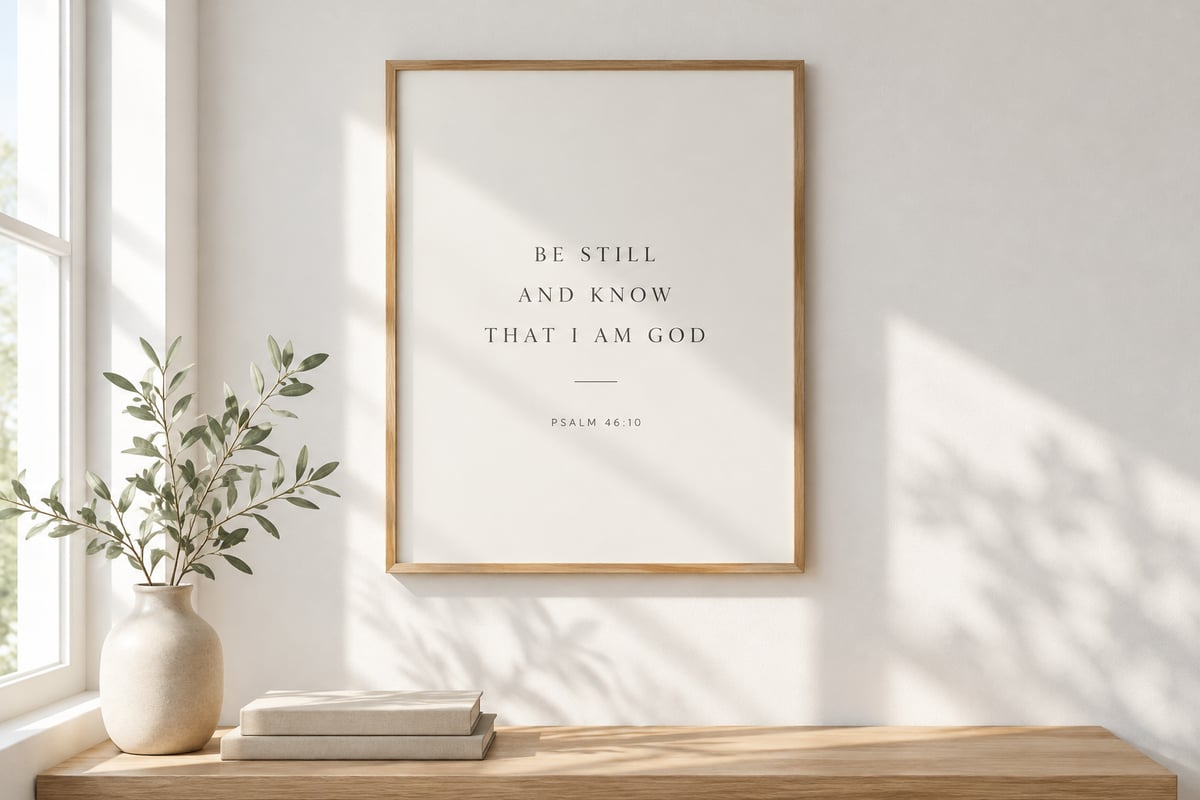
This guide provides practical interior design formulas, room-by-room staging tips, and honest advice to help you select, frame, and hang modern faith-based art. Whether you are decorating your first apartment or refreshing a family home, we will help you build a cohesive, intentional sacred space that honors your style and your beliefs.
Beyond the Farmhouse Cliché: The Evolution of Modern Christian Wall Decor
For years, modern religious home decor was heavily synonymous with the distressed farmhouse aesthetic—characterized by reclaimed wood, heavily weathered textures, and cursive script overlays. While this style holds a nostalgic charm, interior design has evolved. Today, many homeowners seek modern christian wall decor that integrates seamlessly with clean lines, Scandinavian minimalism, and organic modernism.
Traditional (Heavy/Distressed)  --->  Modern (Clean/Minimalist)
- Thick, dark, ornate wood frames     - Slim white oak, maple, or black frames
- Heavily distressed textures         - Smooth matte finishes & premium cotton paper
- Intricate, crowded script fonts     - Crisp sans-serif & elegant serif typography
- High contrast, saturated colors     - Soft neutrals, earthy tones, and generous negative space
Modern design prioritizes simplicity, balance, and intentionality. It shifts the focus from loud, distressed statements to minimalist christian art that uses ample negative space (the blank area around a design) and organic geometric shapes. This modern aesthetic allows the message of the artwork—whether a single scriptural word or a subtle symbolic illustration—to breathe and resonate more deeply.
Navigating Denominational Traditions with Art
When selecting faith-based art, it is also helpful to recognize how different denominational traditions express beauty and reverence:
- Protestant Traditions: Often lean toward typography, minimalist design, and direct scripture prints. The emphasis is frequently on the written Word, utilizing clean, readable layouts that highlight a specific verse or theological concept.
- Catholic and Orthodox Traditions: Traditionally cherish rich iconography, portraits of the Saints, classic crucifixes, and symbolic imagery. Modern adaptations of these classic motifs often simplify the backgrounds, focusing on elegant line art, understated charcoal sketches, or muted historical oil painting reproductions.
Ultimately, your home should reflect your personal relationship with God rather than the pressure of passing retail trends. Choosing abstract christian art or a quiet botanical landscape with an embedded verse is an deeply personal decision. The goal of modern faith-based design is to curate a space where you feel spiritually at peace, regardless of what is currently trending on social media.
Visio Divina: Reducing Visual Noise for Spiritual and Mental Wellness
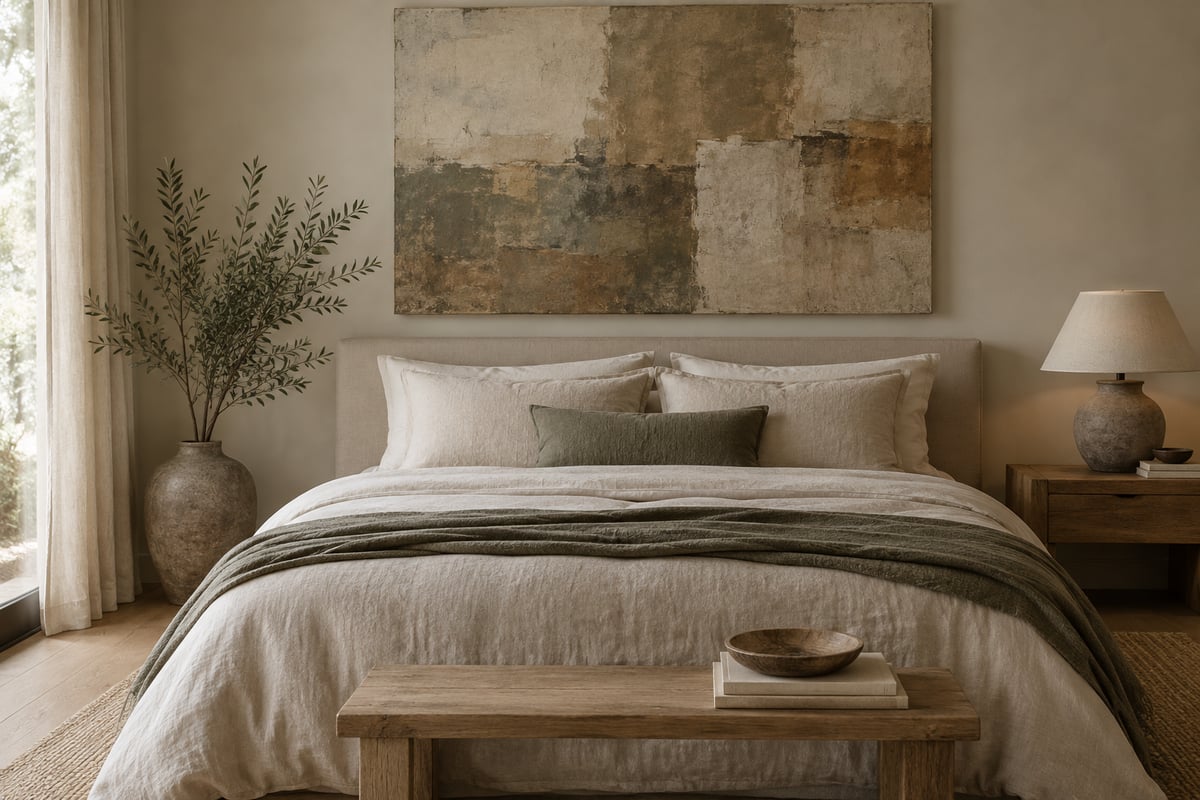
In our fast-paced, screen-heavy world, our brains are constantly bombarded with visual clutter. The spaces we return to at the end of the day should act as an antidote to this sensory overload. This is where the ancient Christian practice of Visio Divina (divine seeing) meets modern interior design.
Visio Divina is a meditative practice that uses visual art as an anchor for prayer, contemplation, and reflection. Rather than reading a text quickly, you invite your eyes to rest gently on an image, letting its colors, shapes, and message sink into your spirit.
[Visual Overload / Noise] ---> [Cluttered, Distressed Wall Decor] ---> Increased Cortisol
[Visio Divina / Stillness] ---> [Intentional Neutral Decor + White Space] ---> Stress Reduction
To support this contemplative practice, modern homes benefit from neutral faith-based decor. When a room has too many competing visual elements, our eyes struggle to rest, leading to what interior designers call "visual noise." Over-decorating every wall with dense text can lead to a kind of "spiritual dumping"—where the sacred words lose their impact because they are competing with too many other messages.
Integrating generous margins of white space on your walls provides psychological breathing room. This connection between our physical environment and our internal state is well-documented. For instance, National Institutes of Health research highlights how light, order, and nature-inspired elements in our physical spaces can significantly lower biological stress markers.
Similarly, global health frameworks, such as World Health Organization data on mental well-being, emphasize the vital importance of creating low-stress, restorative home environments. By intentionally selecting quiet, contemporary religious art with soft color palettes, you are not just decorating a room; you are constructing a daily sanctuary that supports your mental, emotional, and spiritual health.
Room-by-Room Staging: Selecting the Right Scripture Prints
Every room in your home serves a distinct practical and emotional purpose. To make your Christian wall art feel truly integrated, tailor your print selections to the specific mood and function of each space.
┌────────────────────────────────────────────────────────┐
│                      YOUR HOME                         │
├───────────────┬────────────────┬───────────────┬───────┤
│ LIVING ROOM   │ BEDROOM        │ ENTRYWAY      │ NURSERY
│ Bold/Central  │ Serene/Boho    │ Warm/Welcoming│ Soft  │
│ Abstract/Land.│ Warm Neutrals  │ Scripture Sign│ Gentle│
└───────────────┴────────────────┴───────────────┴───────┘
1. The Living Room: The Heart of Community
The living room is a high-traffic area where you gather with family and entertain guests. This space calls for an artistic focal point that sparks conversation and sets an inviting tone.
- Art Style: Large-scale living room christian wall art, such as a striking biblical landscape art piece (like a minimalist rendering of the mountains of Judea or the Sea of Galilee) or a high-quality abstract design.
- Staging Tip: Position one dominant piece over your sofa or fireplace. This establishes an immediate focal point without cluttering the room.
2. The Bedroom: A Restful Sanctuary
Your bedroom is your private retreat for rest, restoration, and personal prayer. The art here should promote deep relaxation and a sense of safety.
- Art Style: Soft, warm neutral boho scripture prints or quiet watercolor botanicals paired with calming scriptures (e.g., Psalm 4:8, "In peace I will lie down and sleep...").
- Staging Tip: Hang a complementary set of two or three smaller bedroom scripture prints directly above the headboard, keeping the frame colors light and organic (like raw maple or warm white oak).
3. The Entryway: Setting the Tone
The entryway is the transition zone between the chaotic outside world and the peace of your home. It speaks a quiet word of welcome to everyone who crosses your threshold.
- Art Style: A clean, legible entryway bible verse sign featuring verses of blessing, hospitality, or dedication (e.g., Joshua 24:15, "As for me and my house...").
- Staging Tip: Pair a medium-sized print with a small console table, a catch-all tray for keys, and a live potted plant to create a warm, inviting vignette.
4. The Nursery: Sowing Seeds of Peace
A child’s room should feel secure, gentle, and imaginative. Avoid overly complex designs in favor of soft, approachable imagery.
- Art Style: Whimsical, soft-toned christian nursery decor featuring gentle animal illustrations, illustrated Noah's Ark motifs, or comforting truths like "Fearfully and wonderfully made."
- Staging Tip: Keep frames lightweight and use acrylic glazing instead of glass for safety. Hang them at a safe distance from the crib or changing table.
Where NOT to Hang Religious Art
While displaying your faith is beautiful, certain locations can unintentionally diminish the reverence of the artwork. Avoid placing highly sacred representations, portraits of Christ, or deeply meaningful scriptures in highly utilitarian or moisture-prone areas.
Standard guest bathrooms, for example, are prone to high humidity that can warp prints, and the casual nature of the space can feel mismatching for sacred themes. Keep your most meaningful pieces in spaces designed for quiet reflection, gathering, and rest.
The Golden Staging Rules: Measurement, Scale, and Layout
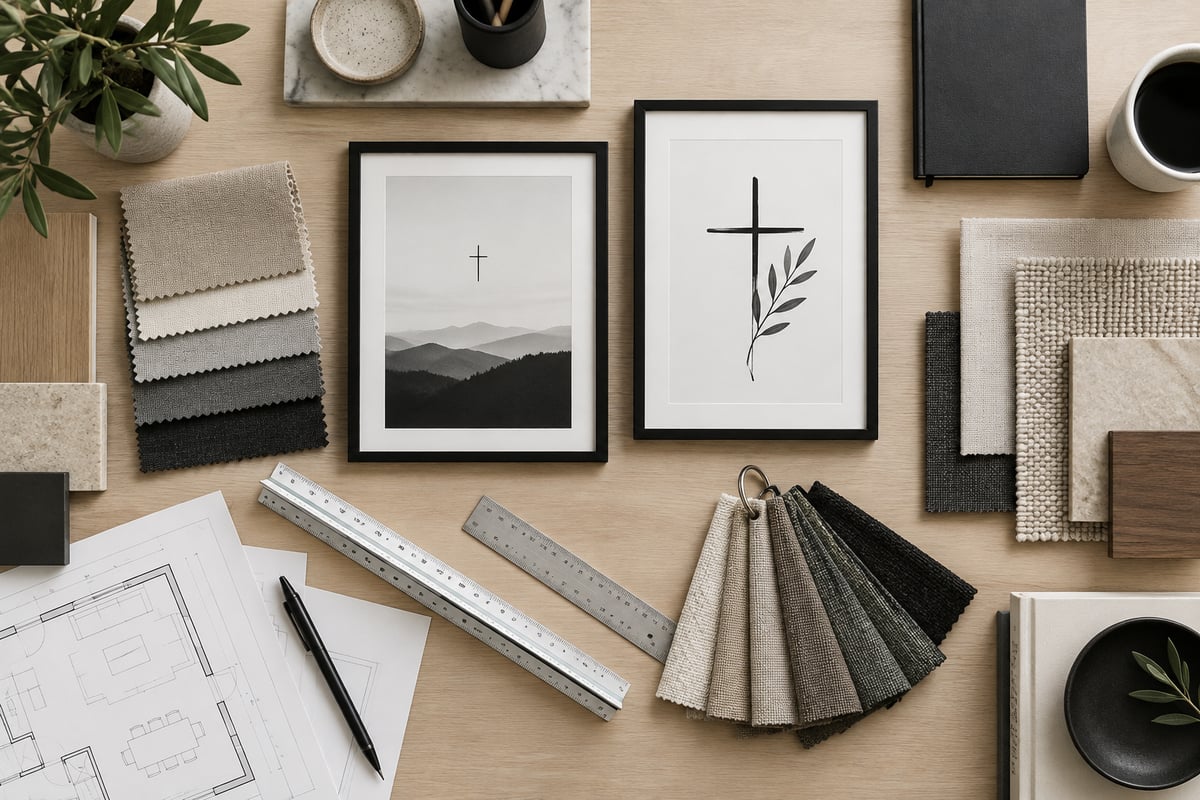
Even the most beautiful art print can lose its impact if it is hung too high, too low, or is dwarfed by the furniture beneath it. Professional interior designers use mathematical formulas to ensure art displays look balanced and cohesive.
              ┌───────────────────────────┐
              │                           │
              │         ARTWORK           │ (Center at 57"- 60" from floor)
              │                           │
              └───────────────────────────┘
                ▲                       ▲
                │◄───── 2/3 Width ─────►│
          ┌───────────────────────────────────┐
          │                                   │
          │             SOFA / CONSOLE        │
          └───────────────────────────────────┘
Rule 1: The Rule of One (Avoiding Visual Clutter)
If you have a wall dedicated to a high-impact religious piece—such as a large canvas bible verse art print or beautiful minimalist crosses for wall—let it stand alone. Surrounding a powerful scripture print with too many decorative accents dilutes its spiritual and visual weight. Give your primary pieces space to be noticed.
Rule 2: The 2/3rds Dimensional Rule
When hanging artwork over a piece of furniture (like a sofa, console table, or bed headboard), the artwork or gallery layout should cover approximately two-thirds (60% to 75%) of the total width of the furniture below it.
- The Math: If your living room sofa is 84 inches wide, your art grouping or single frame should measure roughly 50 to 56 inches across. Anything smaller will look disconnected and floating; anything wider will overwhelm the furniture.
Rule 3: The Golden Height (57 to 60 Inches)
The most common mistake homeowners make is hanging art too high. Art should always be hung at eye level. In the design world, this is defined as centering the middle of the artwork 57 to 60 inches from the floor.
- Measure from the floor up to 58 inches and mark the wall lightly with a pencil.
- Find the vertical center point of your framed art.
- Align the center point of the art with your 58-inch mark.
(Note: If you are hanging art above a console table or mantel, leave a 4-to-6-inch gap between the bottom of the frame and the top of the furniture, regardless of the 57-inch rule).
Rule 4: Unifying Diverse Art Through Framing
If you want to build a gallery wall that combines different mediums—such as a minimalist cross, botanical sketches, and framed scripture prints—unify them using consistent frame finishes.
- Warm White Oak / Light Wood: Perfect for a modern, Scandinavian, or boho look.
- Slim Black Aluminum: Excellent for modern, industrial, or high-contrast minimalist spaces.
- Soft White Wood: Creates a clean, peaceful, and almost seamless look against light walls.
The Practical Guide to Printable Art: Flexibility and Trade-Offs
When it comes to purchasing Christian wall art, digital printables offer incredible flexibility, affordability, and customization. Rather than paying premium shipping fees and markups on pre-framed pieces, digital downloads allow you to purchase a design once and print it at your local print shop, online printer, or even on your home printer.
However, as a digital creator running SelfLoveJourney33 on Etsy, I believe in sharing the honest practical trade-offs of printable art. While it is highly accessible, achieving a professional, gallery-worthy look requires a basic understanding of print preparation, paper quality, and color display.
1. The Screen vs. Paper Reality (Color Calibration)
What you see on your glowing computer or smartphone screen will always look slightly different when printed on paper. Screens emit light using the RGB color spectrum, whereas physical printers lay down ink using the CMYK color spectrum.
Because screens are backlit, colors will naturally appear brighter and more saturated digitally than they do on paper. To avoid disappointments:
- Make sure your printer's settings are set to "High Quality" or "Photo Paper" rather than "Standard Draft."
- Opt for professional local or online printers (such as MPix, shutterfly, or local print shops) if you are printing rich colors or detailed watercolor art.
2. Paper Weight and Finish (The Key to Luxury)
Never print your fine art on standard copy paper. Standard printer paper is too thin, causes ink bleeding, and will buckle inside a frame.
- Weight: Look for a heavy cardstock or fine art paper with a weight of at least 200 gsm (grams per square meter) / 80lb cover weight.
- Finish: Use a matte or semi-matte (satin) finish. High-gloss finishes create distracting glares under natural indoor lighting, making it difficult to read text-based prints from different angles in the room.
3. Aspect Ratios Demystified
When you purchase digital downloads, creators typically package files into specific "aspect ratios." An aspect ratio is the proportional relationship between the width and height of an image. If you stretch a 4:5 ratio image into an 11:14 frame, you will awkwardly crop or distort the design.
To make this seamless, here is a quick reference guide to matching common digital file ratios with standard framing sizes:
| File Ratio | Common Frame Sizes (Inches) | Best Used For |
|---|---|---|
| 4:5 Ratio | 4"x5", 8"x10", 12"x15", 16"x20" | Standard US frame sizes (very easy to find) |
| 3:4 Ratio | 6"x8", 9"x12", 12"x16", 18"x24" | Medium to large gallery focal pieces |
| 2:3 Ratio | 4"x6", 8"x12", 12"x18", 16"x24", 24"x36" | Large vertical statement prints |
| 11x14 File | 11"x14" | Classic standalone desktop/shelf prints |
| ISO (5:7) | A5, A4, A3, A2, A1, 5"x7" | International standard framing |
At SelfLoveJourney33 on Etsy, we love helping our community coordinate niche artwork themes. We enjoy showing how to pair natural elements—like botanical prints or cottagecore accents—alongside modern scripture to make a custom gallery wall that feels personal.
Whether you are looking for a unique entryway design or a warm, personalized gift for a loved one's housewarming, digital printables give you the freedom to choose the exact sizing, frame, and finish that aligns with your home's unique character.
Designing a Home That Speaks of Faith
Styling Christian wall art is not about chasing the perfect, pristine catalog aesthetic or spending a fortune on luxury gallery pieces. It is about creating a space that feels deeply personal, calm, and grounded in your values. By choosing clean, modern designs, utilizing generous margins of negative space, and applying simple staging rules, you can transform your home into a place of rest and spiritual encouragement.
Ready to find the perfect art piece for your home? Explore the curated collection of modern printables, scripture designs, and custom gifts at SelfLoveJourney33 on Etsy, and start styling your sacred space today.